Cloud Dream: A Color Font for Modern Visual Storytelling
Understanding the Unique Appeal of Cloud Dream
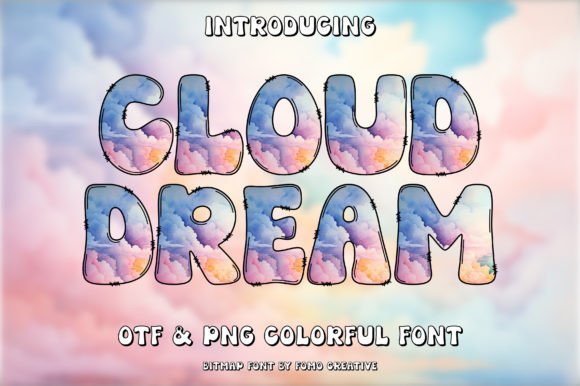
When we talk about a premium font, we usually think about perfect kerning, extensive character sets, and crisp vectors. However, Cloud Dream redefines what a premium typeface can be. It is a color font, meaning the file contains not just shape data, but also color information, gradients, and visual textures. Unlike a standard serif font or sans serif font that relies on the user to select a single color, Cloud Dream arrives ready to impress with its built-in chromatic layers.
The visual personality of this font is distinctively ethereal yet bold. It captures a "dreamy" aesthetic, likely featuring soft gradients, iridescent sheens, or perhaps a textured finish that mimics artistic mediums. It sits at the intersection of modern typography and digital art. For designers, this changes the workflow significantly. You are no longer just typesetting; you are placing a piece of digital art onto your canvas. It brings an immediate sense of depth and dimension that flat text simply cannot achieve.
Where Cloud Dream Truly Shines: Practical Applications
The versatility of a creative font like Cloud Dream allows it to cross boundaries between different design disciplines. It is not limited to one niche, but rather enhances any project that requires a strong visual hook.
Branding and Logo Design
In logo design, distinctiveness is currency. A startup or small business looking to stand out in a crowded market might struggle to find a unique voice with standard system fonts. Cloud Dream offers an immediate solution. It works exceptionally well for brands in the lifestyle, beauty, or creative sectors. Imagine a boutique cosmetics brand or a digital art studio using Cloud Dream for their wordmark. It instantly communicates a sense of innovation and high-end quality. However, for brand identity systems, it is crucial to remember that this is a display font. It commands attention in headlines but might be overwhelming for body copy.
Digital Media and Web Design
In the realm of web design, user engagement often hinges on visual interest. Cloud Dream can serve as a powerful hero element on a landing page. Because color fonts are vector-based, they remain sharp on high-resolution screens, making them perfect for social media graphics and banner ads. For content creators and bloggers, using this font for post titles or YouTube thumbnails can significantly increase click-through rates. It breaks the monotony of standard web-safe typography and adds a layer of professionalism that suggests high production value.
Print and Editorial Design
While digital is a natural fit, print applications are where the texture of Cloud Dream can really pop. In editorial design, such as magazine covers or feature spreads, it can be used to create eye-catching pull quotes or section headers. It is also a fantastic asset for packaging design. A product box using Cloud Dream can convey a sense of fun, luxury, or creativity depending on the specific color palette embedded in the font. Publishers of children’s books or lifestyle magazines can use it to add flair to chapter titles without needing to hire an illustrator for every page.
The Psychology of Color Fonts in Marketing
Why does a font like Cloud Dream matter to marketers and entrepreneurs? The answer lies in the psychology of visual hierarchy and brand perception. In a split second, a viewer decides whether to engage with content. Standard text is functional, but colored typography is emotional.
Cloud Dream allows you to dictate the mood instantly. If the gradients are warm and vibrant, the brand feels energetic and approachable. If the effects are cool and metallic, the brand feels sleek and authoritative. This ability to influence brand perception through typography is a subtle but powerful strategy. It helps in building brand recognition; people may forget the words, but they will remember the unique, colorful text style they saw on a poster or a website.
Furthermore, using a commercial font with these capabilities ensures consistency. Instead of trying to recreate gradient text effects in Photoshop for every social media post, the font renders the effect automatically. This ensures that your visual identity remains consistent across all touchpoints, from a PDF brochure to a mobile website.
Mastering the Use of Cloud Dream: A Designer’s Guide
Integrating a display font with built-in effects requires a different approach than using a standard script font or handwritten font. Here is how to get the most out of Cloud Dream while maintaining professionalism and readability.
1. Prioritize Readability and Hierarchy
Because Cloud Dream is designed to be visual, it is best used for headlines, sub-headers, and short call-to-action phrases. Avoid using it for long paragraphs of body text. The visual complexity that makes it beautiful can cause eye strain if read in large blocks. Pair it with a clean, neutral sans serif font for body copy. This contrast creates a balanced visual hierarchy where the display font grabs attention and the body font delivers the information clearly.
2. Evaluate the Project Fit
Not every project suits a color font. A legal firm’s annual report or a minimalist tech blog might find Cloud Dream too distracting. Conversely, it is perfect for:
- Greeting cards and invitations.
- Flyers and posters for events.
- Web design headers and hero sections.
- Brochures for creative industries.
3. Test Font Pairings
When choosing a font pairing, look for contrast in structure. Since Cloud Dream likely has a complex appearance, pair it with a geometric sans serif or a simple serif. Avoid pairing it with other decorative or script fonts, as this will result in a cluttered design. The goal is to let Cloud Dream be the star of the show while the secondary font plays a supporting role.
4. Check Commercial Licensing
Before using Cloud Dream in a commercial capacity, verify the licensing. Most premium fonts require a specific license for commercial use, such as for client work, merchandise, or logo design. Ensure your license covers the intended usage, whether it is for a single user or a whole team. This protects you legally and supports the type designers who created this intricate design asset.
5. Technical Considerations
Color fonts are supported by most modern operating systems and software, including Adobe Creative Cloud and recent versions of Microsoft Office. However, support can vary. Always test the font in your specific software environment before committing to a design. If you are using it for web design, ensure the web font version is optimized for loading speeds, as color font files can be larger than standard fonts.
Conclusion: Elevating Your Creative Projects
Cloud Dream represents the evolution of modern typography. It bridges the gap between text and illustration, offering a tool that is both expressive and functional. For designers, bloggers, and small business owners, it provides a way to inject personality into projects without needing advanced illustration skills. By understanding its strengths and limitations, you can use Cloud Dream to create visuals that are not only read but felt. It is more than just a font; it is a statement of style.